













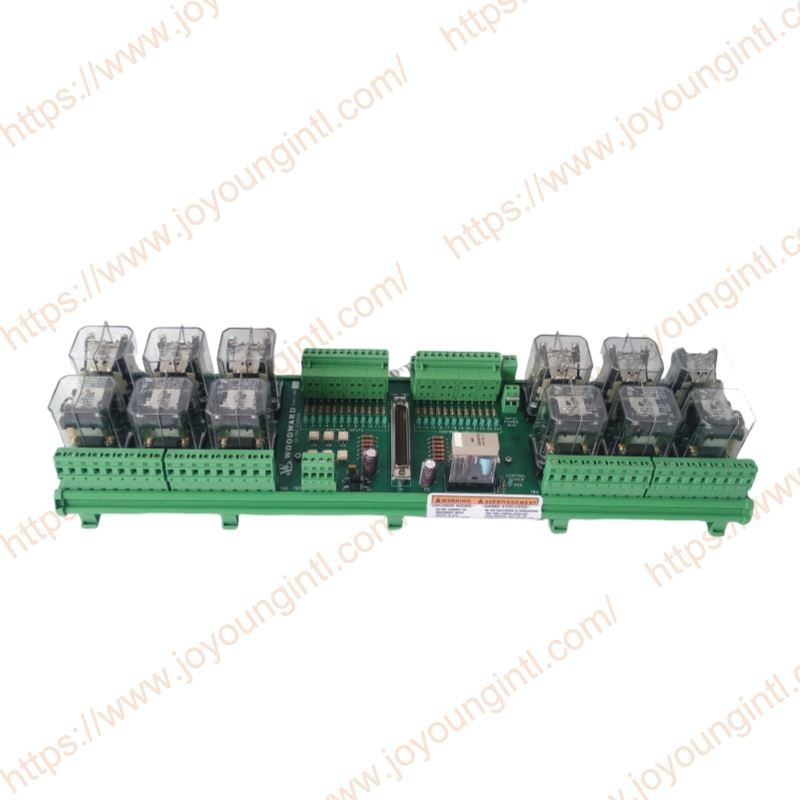
Product Introduction
5441-693 is a discrete input/output (Discrete I/O) field terminal module specifically designed for industrial automation control systems. It is produced by the American manufacturer Woodward and is used to connect on-site switch quantity signals with the control system. It transmits digital (discrete) input signals from sensors, switches, limit devices, etc., to the controller, and realizes the control of devices such as actuators, motors, and lights through the relays inside the module.
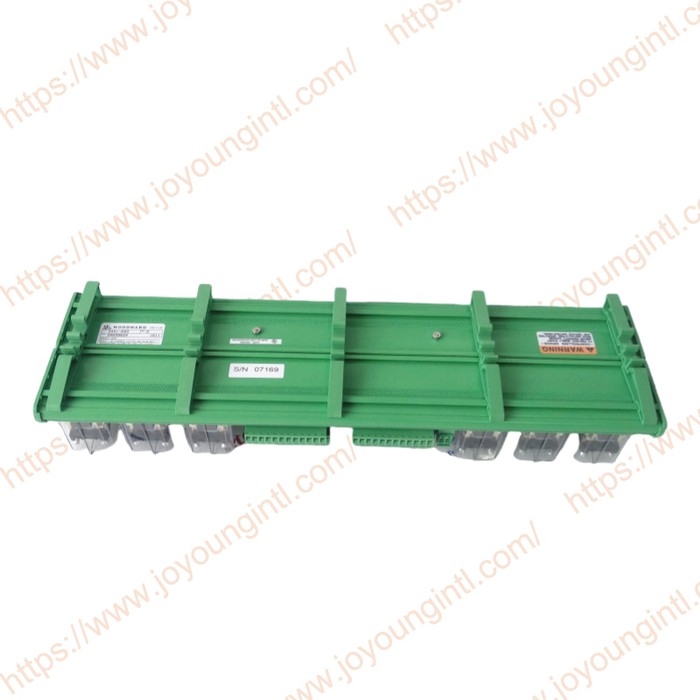
Technical Specifications
|
Brand |
WOODWARD |
|
Model |
5441-693 |
|
Description |
Module HD DISCRETE I/O FTM (24 IN/12 OUT) |
|
Origin |
USA |
|
Dimension |
45*20*15m |
|
Weight |
0.85kg |
| Notes | Purchased from Phoenix Contact. No surface mount components. |
Product Details
The Woodward 5441-693 industrial automation discrete I/O (Discrete Input/Output)module/field terminal module is mainly used for:
Expand the number of I/O channels in the control system.
Provide reliable discrete signal acquisition and control output;
Execute industrial site control logic;
Communicate and interact with control hosts such as PLC/DCS.
The WOODWARD 5441-693 module is suitable for application in the following specific industrial scenarios:
Industrial automation control system: used to interface with various sensors and actuators to achieve automatic control
Power system: used for turbine or generator control in power plants
Oil and gas industry: used for process control, such as drilling and pipeline systems
Chemical industry: used to regulate chemical reactions or fluid processes that require precise control
Pump and fan control: used to precisely control the operation of pumps and fans
Conveyor control: used for precise control and management of conveyors
Installation precautions:
Connection details
Properly configure the 24 VDC power supply.;
The input channels are wired in accordance with the wiring specifications for on-site sensors.
The output relay terminals are connected to the motors/actuators and other devices according to the load requirements.
The ground wire and the shielding wire should be properly grounded to enhance the anti-interference capability.
2. Communication Connection
If using communication methods such as RS-485, it is necessary to ensure the correct connection of the A/B differential lines.
When configuring protocols such as Modbus RTU, pay attention to the address and baud rate settings.
The upper-level controller (PLC/DCS) must accurately identify the communication parameters of the modules.
Circuit diagram:
24 VDC (+) --------- (Input Terminals IN1 ... IN24)
└─ To Field Sensor / Switch ──────────┐
└─── 0 VDC (PLC 0 V / Ground)
*The input end adopts an optical isolation input, which can collect 24 V signals from switches, proximity sensors, limit switches, etc.
*The input common ground is usually connected to the negative side of the PLC's 0V load.
Relay output wiring:
24 VDC Supply (+) ─── to Relay Common (C)
│
Relay NO ──── Load (Such as lamps, contactor coils)
│
Load Return ─── 0 VDC
*The output terminal of the relay is a free contact, and an external power supply is required to supply power to the load.
*The output of relays is usually labeled as COM / NO / NC.
*The "Load" can refer to indicators, solenoid valves, coils, etc.
Why choose Woodward 5441-693
Suitable for various industrial automation scenarios and with strong I/O expansion capabilities.
Easy to integrate with control hosts such as PLC/DCS.
Easy to install and maintain, and capable of adapting to changes in the on-site environment.