











Product Introduction
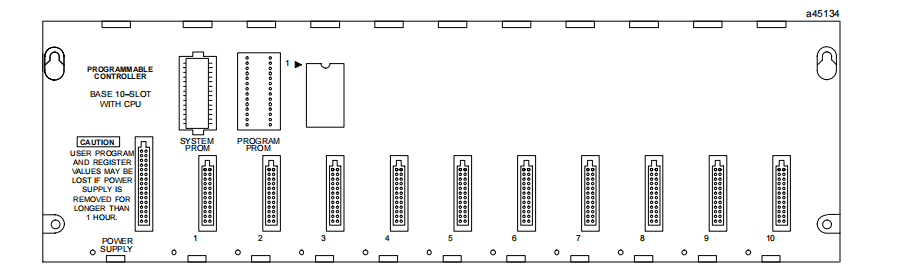
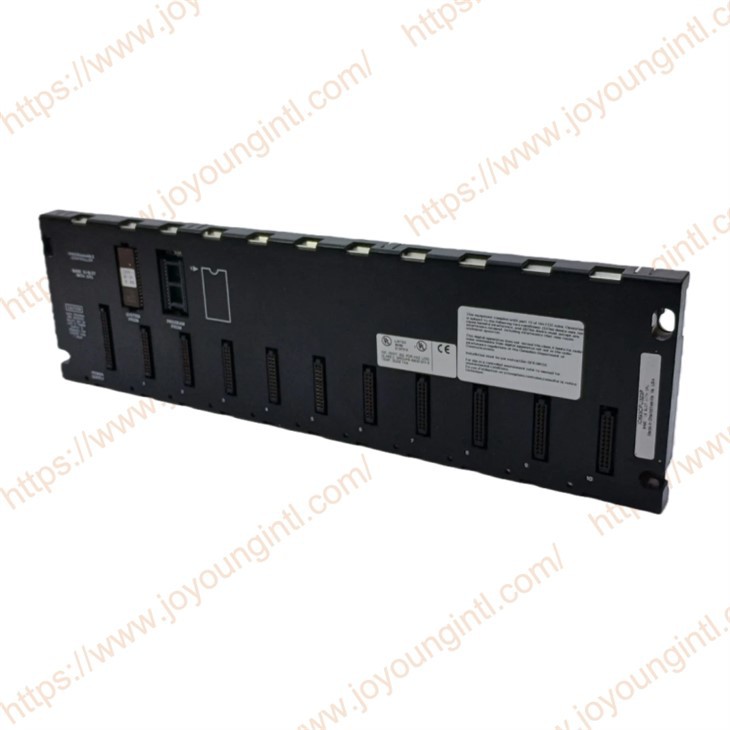
IC693CPU323 is a 10-slot embedded Turbo CPU baseboard in the GE Fanuc 90-30 series. It features 10 I/O slots and 1 dedicated power slot, and is compatible with multiple basic I/O modules of the 90-30 series. It is only equipped with a basic serial communication port by itself. If it is paired with optional communication modules such as Ethernet, Profibus, and GCM, it can be connected to the corresponding type of industrial network to achieve data interaction with other control devices and upper computers, and adapt to the communication requirements of different scenarios.
Technical Specifications
|
Manufacture |
GE |
|
Model |
IC693CPU323 |
| Part Number | IC693CPU323 |
|
Description |
10-SLOT BASE with CPU |
|
Origin |
USA |
|
Dimension |
30*25*5cm |
|
Weight |
0.55kg |
IC693CPU323 Main functional features
Program Execution and Control
Be responsible for high-speed scanning and execution of control programs written by users (ladder diagrams, statement lists, function block diagrams, etc.).
It provides a comprehensive and powerful instruction set, supporting complex logical, mathematical operations, data manipulation and process control.
Memory
User program memory: It provides a large-capacity storage space of 64K bytes, which is used to store complex control logic and system configuration.
Data register memory: It provides 32K bytes of storage space, offering sufficient storage for a large number of variables, arrays, and process data.
The memory type is RAM + lithium battery backup. User programs can be saved to the internal non-volatile memory (flash memory).
Built-in communication interface
Ethernet interface: Integrates a 10Base-T Ethernet port (RJ-45 interface). This is its most prominent feature.
Supports SRTP protocol (GE's dedicated industrial Ethernet protocol) for high-speed data exchange with upper computers (HMI/SCADA), programming workstations and other SRTP-enabled devices.
Supports Modbus TCP server function, facilitating standardised communication with third-party software or devices that support Modbus TCP (such as advanced HMI, MES systems).
IC693CPU323 Configuration and Programming
Programming software
Use Proficy Machine Edition (PME) for hardware configuration, program writing, debugging and downloading. It can be connected via a serial port or an Ethernet port.
Network configuration
It is necessary to configure a unique IP address, subnet mask and gateway for the CPU323 in the PME software to facilitate Ethernet communication.
Physical and installation specifications
External dimensions: Standard 90-30 series single-slot CPU module, but due to its complex functions, it is usually slightly longer than the basic CPU.
Installation location: It must be installed in the leftmost slot of the local rack of the Series 90-30 PLC.
Status indicator light: The panel is equipped with multiple LED indicator lights, including:
RUN/STOP: Running/Stopping state
BATT: Low battery power
FAULT: Fault indication
COM1: Serial communication activity
COM2 (ETH): Ethernet port link/Activity status indicator
Battery: A lithium battery is used for the power-off retention of RAM data and rthe eal-time clock.
Technical performance parameters
Scanning speed: The typical scanning time is 0.4 milliseconds per K logic instruction, which belongs to the high-end performance in the 90-30 series.
Expansion capability: Up to 2 expansion racks can be connected (using the expansion cable IC693CBL3xx), and a total of 3 racks can be managed.
Communication port
1 x 10 BASE-T Ethernet port (RJ-45)
1 x RS-232/485 switchable serial port (9-pin D type)
Supported protocols: SRTP, Modbus TCP, FTP (Ethernet end); SNP, Modbus RTU (Serial Terminal)
Typical application fields
This CPU is suitable for complex applications that require high-performance logic control, factory-level data integration, and networked management, such as:
Large-scale material handling and distribution centre
Complex manufacturing assembly lines and assembly lines
A process monitoring system that needs to be integrated with the factory information network (IT system)
As the central master station of a medium-sized distributed control system.