












Product Introduction
CA202 is a piezoelectric acceleration meter that is suitable for measuring vibration and impact. It is usually used in industries, aerospace, automobiles, and other areas that need accurate vibration analysis. This sensor is used to continuously monitor the vibration status of industrial equipment. It is one of the core hardware components in machine condition monitoring (CMS) and mechanical fault protection systems, and is particularly suitable for online vibration detection of large rotating machinery such as steam turbines, compressors, and generators.
Technical Specifications
|
Model |
CA202 |
|
PN Number |
144-202-000-105 144-202-000-205 |
|
Description |
Piezoelectric Accelerometer |
|
Origin |
Switzerland |
|
Dimension |
17*17*7cm |
|
Weight |
0.85kg |
Product Details
CA202 144-202-000-105 & 144-202-000-205
Product Category: Piezoelectric Accelerometer
Series: CA (High Temperature/Industrial Vibration Sensor Series)
Typical Applications: Industrial machinery vibration monitoring, condition monitoring, and fault diagnosis. Industry: Energy, petrochemicals, heavy manufacturing, power generation, and other industrial field systems
The working principle of piezoelectric acceleration sensors
The acceleration sensor is used to convert mechanical vibration or acceleration into electrical signals. The CA202 is a piezoelectric sensor. Its core working principle is as follows:
Contact: info@htechplc.com
Piezoelectric effect
Piezoelectric materials (usually piezoelectric ceramics or crystals) generate electric charges on their surfaces when subjected to force or stress. The charge is proportional to the force applied, so the intensity of mechanical vibration can be reflected by measuring the output charge.
The relationship between acceleration and force
When the sensor is installed on a rotating or vibrating machine, the acceleration force is transmitted to the piezoelectric wafer. The inertia force generated by the vibration fractures the piezoelectric element, thereby producing an electrical charge output.
Signal output
Due to the extremely small electric charge signal output by piezoelectric materials, an external signal conditioner (Charge Amplifier) is required to convert the charge signal into a usable standard voltage or current output, such as 4 - 20 mA or 0 - 10 V, so that it can be read by PLC, DCS, or signal acquisition systems.
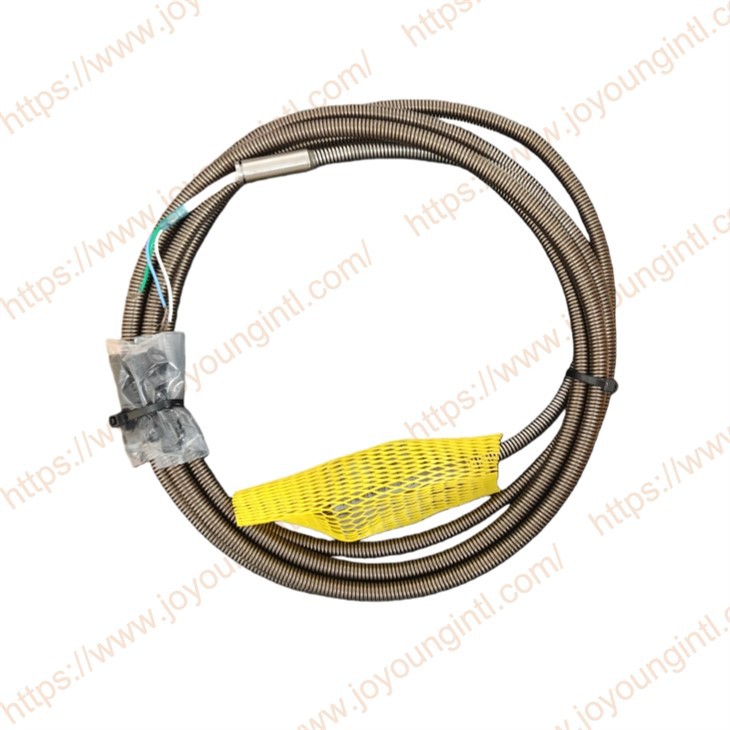
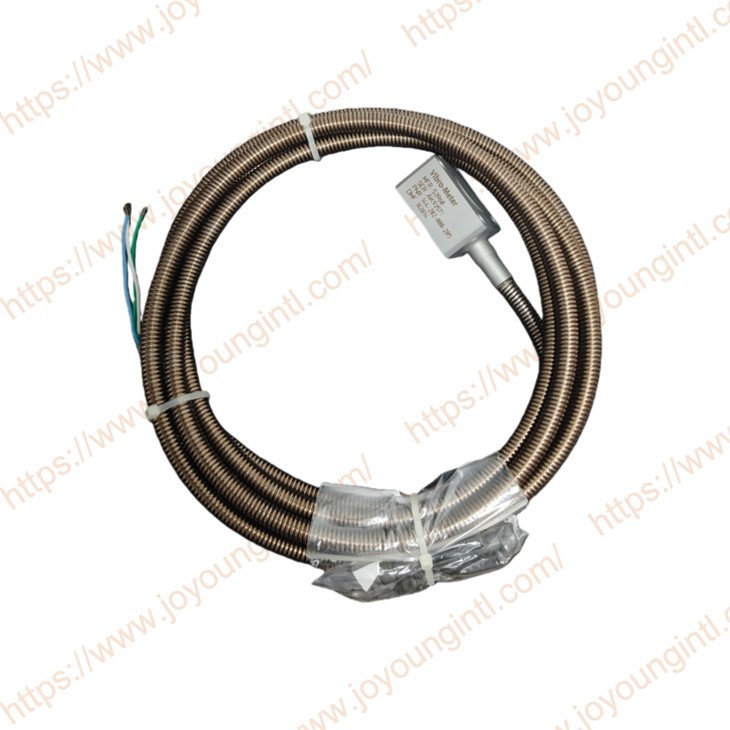
CA202 offers different lengths of integrated cable versions (such as 3 m, 6 m, 11 m, 20 m, etc.), and the appropriate length can be selected based on the installation location and wiring distance on site.
For example:
Ex version,3 m cable length 144-202-000-105
Standard version, 3 m cable length 144-202-000-205
Technical Parameters:
Avian: The range of the acceleration meter is usually very wide, which can cover low-frequency vibration to high-frequency impact.
Frequency response: The wide frequency response range can capture the subtle changes of the vibration signal.
Sensitivity: The degree of response to acceleration changes to the acceleration component is usually represented by MV/G or similar units.
Temperature range: It can work normally within a certain temperature range, which is essential for ensuring reliability under different environmental conditions.
Impact tolerance: It is important to be able to withstand certain impacts and vibrations, which is very important for use in a harsh industrial environment.
Size and weight: usually small, easy to install on various equipment structures.
Application Field:
Aerospace: It is used to monitor the health of aircraft engines, rotation components, and structures.
Automotive industry: used to test and analyze the vibration and impact response of vehicles.
Industrial monitoring: It is used to monitor and diagnose mechanical failures, such as bearing faults, gearbox problems, etc.
Structural health monitoring: Vibration analysis of bridges, buildings, and other structures.
Mechanical installation of the sensor
CA202 installation and use:
Proper installation brackets and fasteners are usually used to ensure that the acceleration meter is firmly fixed on the measurement point.
You need to connect to the appropriate data collection system to record and analyze the measured vibration data.
 1. Drill 4 M6 holes on the flat measurement surface of the tested machine (in accordance with the arrangement of the sensor base);
2. Secure the bottom of the sensor firmly onto the flat mechanical surface;
3. Fix the sensor using M6 × 35mm internal hexagon bolts and spring locking washers. 4. The recommended installation torque is approximately 15 N·m (make sure the mechanical coupling is good; excessive force may damage the sensor).
Installation precautions:
The installation surface must be clean, flat, and free of burrs to ensure efficient vibration transmission.
A tight connection at the bottom of the sensor is beneficial for high-frequency response measurement; The spring locking washer prevents the bolts from loosening due to on-site vibrations.
CA202 outputs a charge signal (charge output), but it does not directly output voltage/current signals that can be recognized by PLC, DCS, and other acquisition systems. Therefore, a signal conditioner (Charge Amplifier) is required to convert the weak charge signal into a standard analog output (such as 4 - 20 mA or 0 - 10 V).
The recommended signal conditioner to be used is the IPC707 series.