













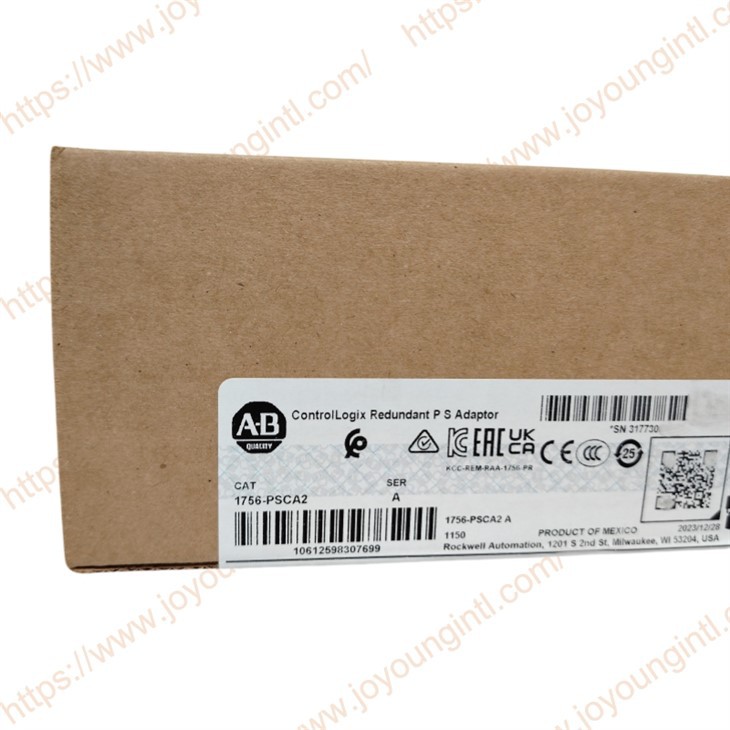
Product Introduction
Specification Parameters
|
Manufacture |
Allen-Bradley |
|
Model |
1756-PSCA2 |
|
Description |
Redundant Power Supply Chassis Adapter Module |
| Power connection cable | Connect the redundant power supply through 1756-CPR2 |
|
Origin |
USA |
|
Dimension |
20*15*10cm |
|
Weight |
0.8kg |
Characteristics of the Redundant Power Supply module
Passive Adapter Design
1756-PSCA2 Redundant Power Supply Chassis Adapter Module adopts a passive design (Passive Design), without any active electronic components inside. This, to a certain extent, reduces the failure points in the power distribution process and enhances the overall reliability of the system.
Redundant Power Supply Integration Capability
1756-PSCA2 Redundant Power Supply Chassis Adapter Module can simultaneously receive input from two redundant power supplies (supporting AC/DC mixed combinations) and integrate them into a single output connected to the chassis backplane. This design allows both power supplies to share the load current, and when one power supply fails, the other can automatically take on the entire load.
Standardized Installation Position
The 1756-PSCA2 Redundant Power Supply Chassis Adapter Module is fixed on the left side of the chassis and is installed horizontally, cooperating with 1756-CPR2 cables to achieve a standardized connection with the power supply. The unified installation position helps simplify the system wiring and maintenance procedures.
Support for Multiple Voltage Rails
Supports all standard voltage rails required by the ControlLogix system: 1.2V, 3.3V, 5.1V, and 24V DC, meeting the power supply requirements of different modules.
Industrial Environment Adaptability
Has a wide operating temperature range (0-60°C) and anti-vibration, anti-shock capabilities, suitable for typical industrial automation environments. At the same time, it is certified by ATEX/IECEx, allowing use in specific hazardous areas.
Status Indication Function
The module is equipped with a power status indicator light, facilitating on-site personnel to quickly determine the working status of the power system.
Installation method
Installing 1756-PSCA2 usually requires the following steps: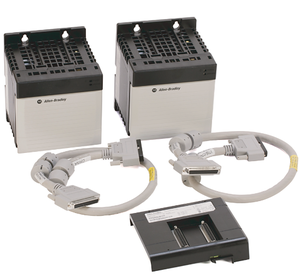
Power-off installation: Ensure that the control cabinet is in a power-off state.
Select the redundant power supply location (usually on the left side of the rack)
Align the 1756-PSCA2 vertically or horizontally with the power adapter slot on the back panel.
Use the 1756-CPR2 data connection cable to connect to the two redundant power supplies.
Confirm that the grounding and wiring are in good condition.
1756-CPR2 is a dedicated connection cable for redundant power supplies. It is used to connect the redundant power supplies with 1756-PSCA2, enabling the outputs of the two power supplies to be aggregated by the adapter onto the main power path.
FAQ
Everything Customers Need to Know
Q1: Cabinet environmental requirements
A: When installing the 1756-PSCA2, the interior of the control cabinet should be kept clean and equipped with appropriate ventilation or cooling measures to prevent the ambient temperature from exceeding the rated operating range.
Q2: Which types of redundant power supplies does this module support?
A: 1756-PSCA2 is specifically designed to be used with 1756-PA75R (AC redundant power supply, 85-264VAC input) and 1756-PB75R (DC redundant power supply, 19-32VDC input). These two models can be mixed and matched. For example, an AC power supply and a DC power supply can be connected simultaneously.
Q3:Does this module support hot swapping?
A: 1756-PSCA2 itself is a passive adapter, and it is not recommended to perform insertion or removal operations while the device is powered on. Although the redundant power supply design allows for onlinereplacement of power units, the replacement of the adapter module usually requires the system to be powered off.
Q4:Does this module support expansion terminal blocks (RTB)?
A: The 1756-PSCA2 supports 3 detachable terminal blocks (RTB). Optional models include 1756-TBSH (spring clamping type) or 1756-TBNH (screw clamping type), which facilitate on-site wiring and maintenance.